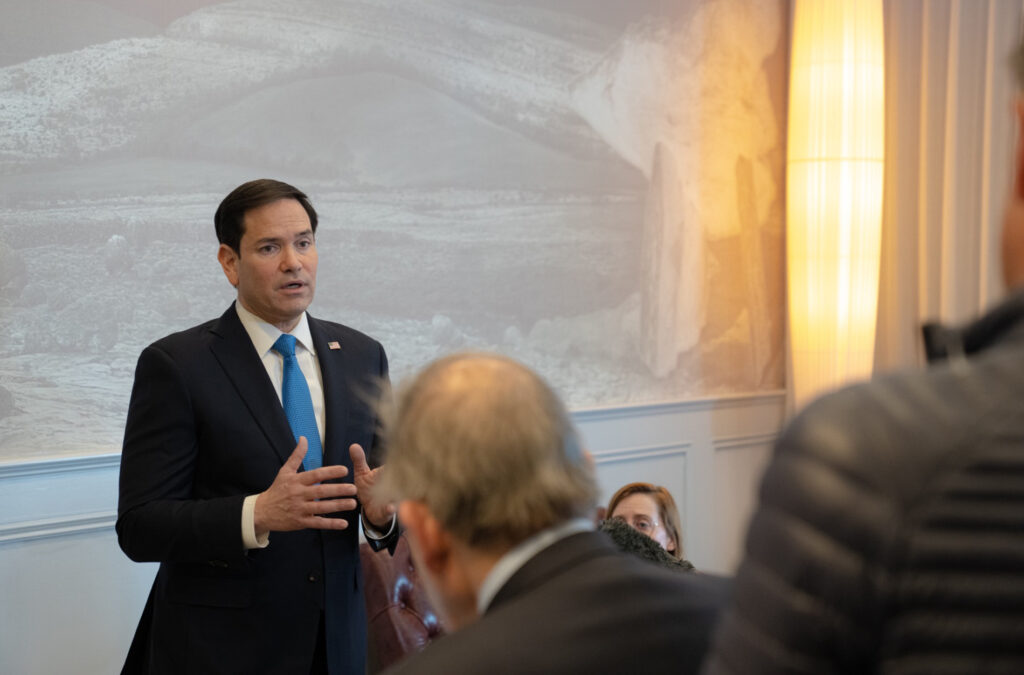
Secretary of State Marco Rubio declared Tuesday that Iran is the only country advocating for a system that would grant Tehran control over commercial passage through the Strait of Hormuz by imposing fees on ships transiting the critical waterway.
Rubio stated that the Strait of Hormuz must remain open and free of any tolling regime.
The Strait of Hormuz serves as one of the world’s most strategically vital chokepoints, connecting the Persian Gulf to the Gulf of Oman and carrying a substantial share of global oil exports. Any disruption to traffic through the passage carries significant consequences for international energy markets.
Under international maritime law, toll systems on international straits are prohibited. The United Nations Convention on the Law of the Sea guarantees vessels the right of transit passage through international waterways, provided they adhere to established regulations, including environmental standards.
Iran, however, has never ratified that treaty, leaving it outside the legal framework that governs maritime passage for most of the international community. That status gives Tehran a degree of legal cover to assert alternative interpretations of sovereignty over the strait, though such positions find little support among other nations.
The remarks underscore ongoing tensions between Washington and Tehran over regional influence and freedom of navigation, issues that have repeatedly flared over the past several decades as Iran has at times threatened to restrict access to the strait during periods of diplomatic or military confrontation.