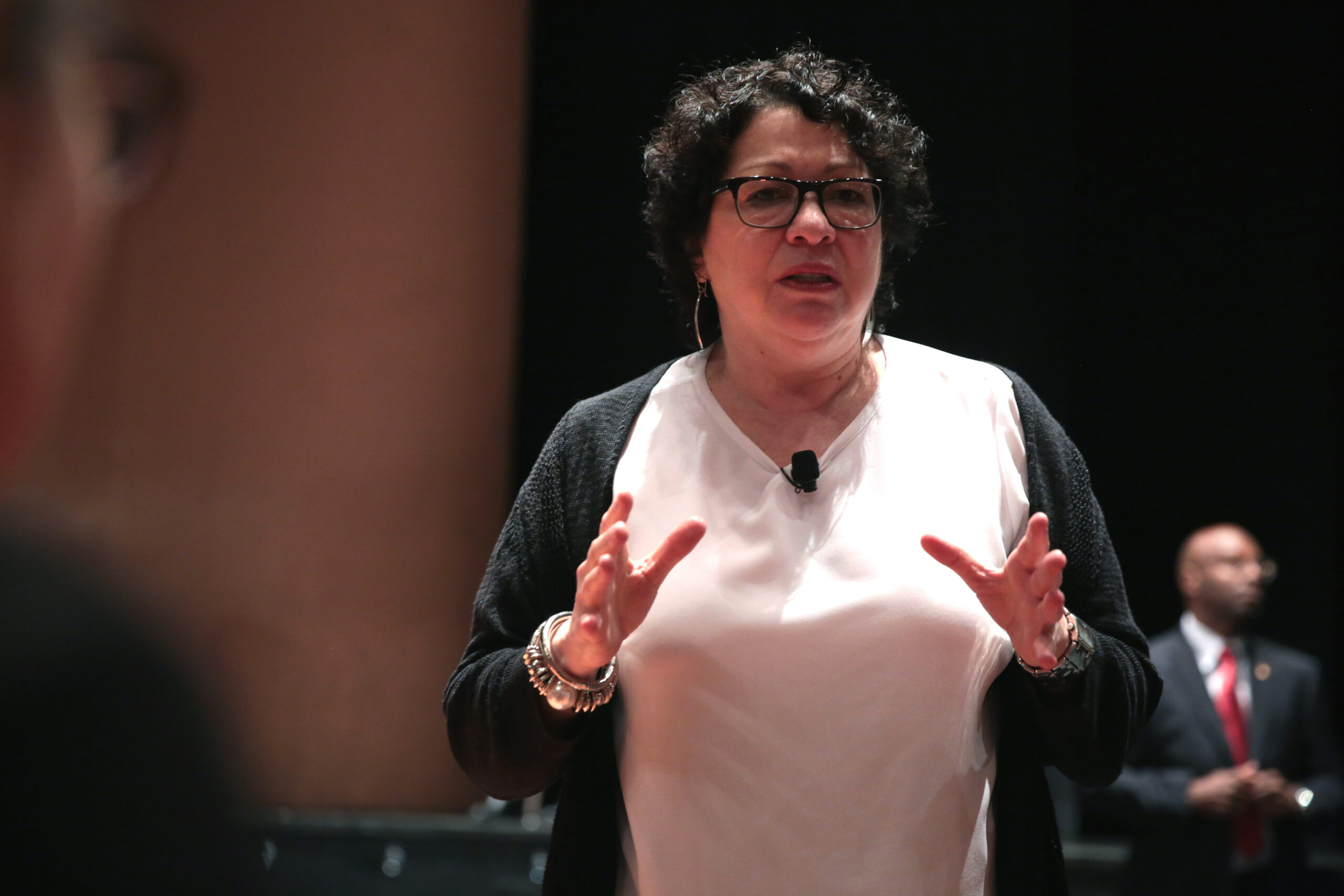


Justice Sonia Sotomayor expressed concern this week over artificial intelligence tools that can accurately forecast Supreme Court outcomes, arguing the trend reflects a lack of intellectual flexibility among the justices. Speaking to law students in Alabama, she balanced her skepticism with a practical call for the next generation of lawyers to embrace AI competence.
Supreme Court Justice Sonia Sotomayor raised pointed concerns Thursday about the growing capacity of artificial intelligence systems to predict how the nation’s highest court will rule, suggesting the phenomenon reveals a deeper problem with how the justices approach their work.
Addressing students at the University of Alabama School of Law, Sotomayor described such predictive tools as a troubling development, arguing that a court whose decisions can be reliably anticipated by an algorithm may not be engaging seriously enough with new arguments or reconsidering entrenched positions.
She did not identify a specific AI system by name, noting only that a fellow justice had brought one to her attention. Multiple legal technology firms and academic researchers have in recent years developed models claiming to forecast Supreme Court decisions with considerable accuracy.
Sotomayor framed her broader view of artificial intelligence in human terms, describing it as a reflection of its creators. Because AI systems are built entirely on human-generated knowledge and input, she said, they carry the same capacity for both advancement and harm as the people who produced them.
The justice’s remarks came in response to a question about where the judiciary should draw the line between beneficial and harmful applications of AI, as courts at various levels increasingly explore how to incorporate the technology into legal practice.
Despite her reservations, Sotomayor acknowledged that AI has already become a fixture in the legal profession. She recounted a recent gathering with former law clerks now working at prominent firms, who told her that new associates are routinely expected to use AI as part of their standard workflow.
That reality informed a direct message she delivered to the students in the room: developing fluency with AI tools should be treated as a professional necessity before graduation, not an optional skill.