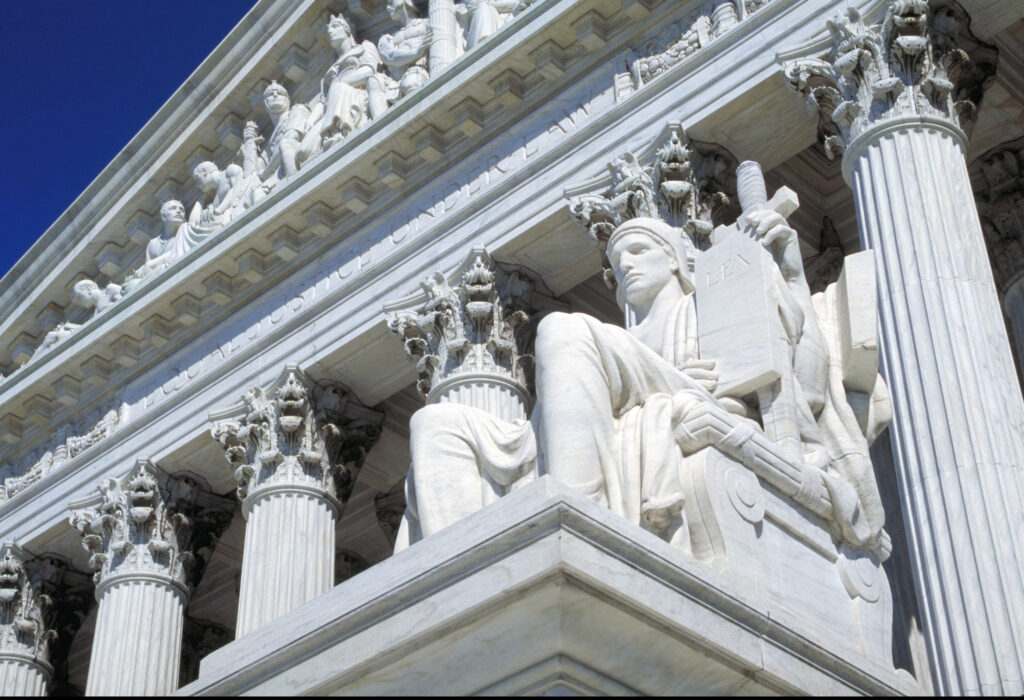
The nation’s highest court announced Monday it would take up the question of whether Title IX grants public school employees the right to pursue private legal action against their employers for sex-based discrimination.
The dispute centers on two separate plaintiffs whose cases were joined on appeal. MaChelle Joseph served as the women’s basketball coach at the Georgia Institute of Technology until her 2019 dismissal, which followed her formal complaint alleging that her program received fewer resources than its male counterpart. Thomas Crowther was an art professor at Augusta University whose contract was not renewed in 2021 after students accused him of inappropriate classroom conduct, including sexual harassment.
Together, the two petitioned the Supreme Court to review their cases, cautioning that the lower court’s decision carries significant consequences for how Title IX is enforced across the country.
Their appeal followed a ruling by the U.S. Court of Appeals for the 11th Circuit, which held that employees at public educational institutions lack a private right of action under Title IX. That position conflicts with the conclusions reached by eight other federal appellate circuits, a legal disagreement that lends urgency to the Supreme Court’s review.
Title IX was enacted in 1972 and prohibits sex discrimination in any educational program or activity receiving federal financial assistance. Over more than five decades, the law has reshaped American education, most notably by enabling the dramatic expansion of women’s collegiate athletics. Its scope, however, has long been tested in the courts, particularly regarding who may invoke its protections.
The Supreme Court’s eventual ruling could significantly alter the legal landscape for school employees who allege workplace sex discrimination at publicly funded institutions.