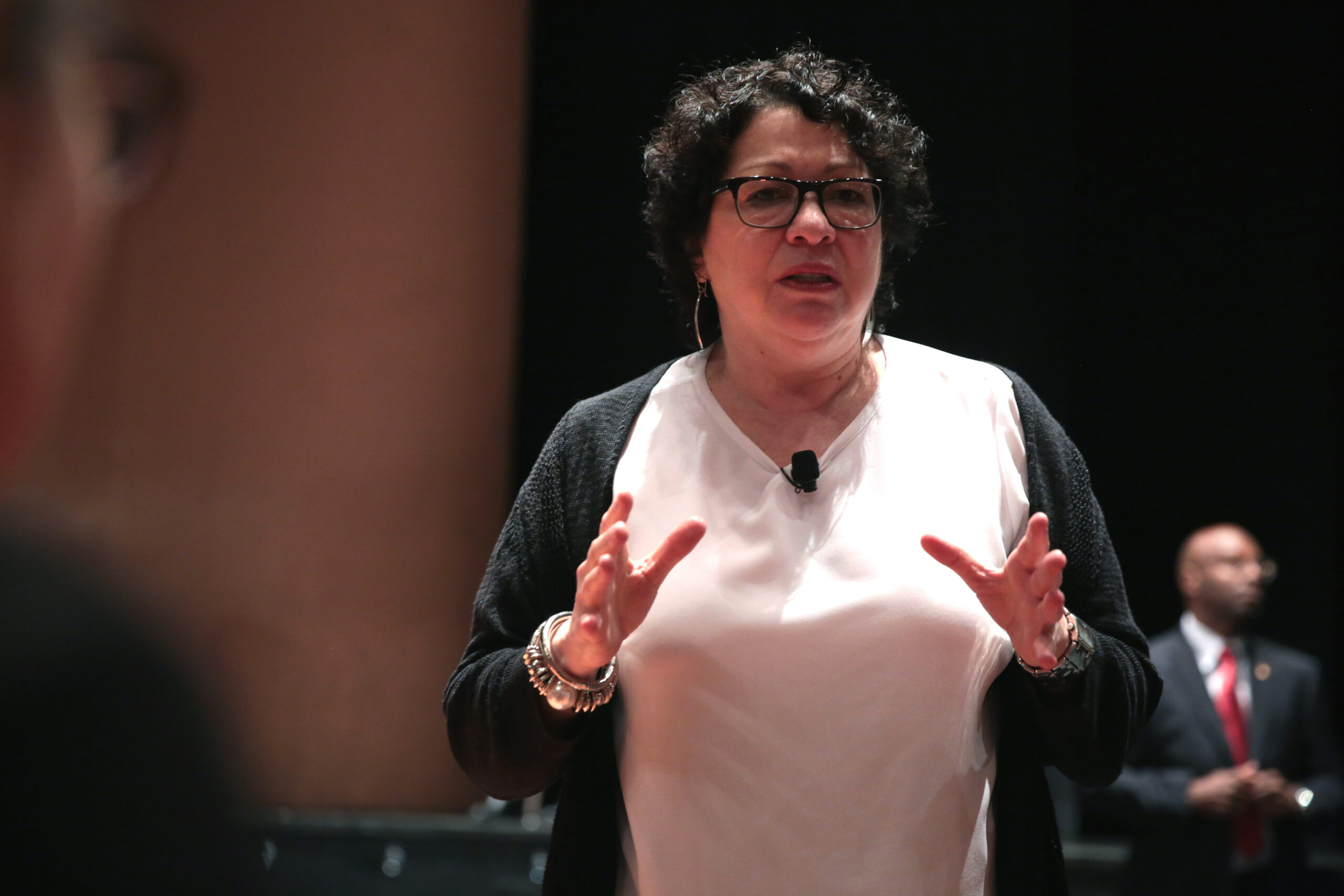


Supreme Court Justice Sonia Sotomayor issued a public apology to fellow Justice Brett Kavanaugh on Wednesday, after comments she made at a law school event drew scrutiny for personally targeting her colleague’s background in the context of a legal dispute.
The remarks were delivered during an appearance at the University of Kansas School of Law, where Sotomayor discussed a 2025 immigration case without identifying Kavanaugh by name. She criticized a colleague for what she described as a failure to appreciate the practical consequences faced by hourly workers during immigration enforcement stops, adding that the colleague in question likely had no personal familiarity with that kind of economic vulnerability.
The case at the center of the remarks is Noem v. Perdomo, in which the Supreme Court voted 6-3 in September 2025 to allow federal immigration enforcement operations to resume in the Los Angeles area. The stay permitted Immigration and Customs Enforcement to factor in apparent race or ethnicity and an individual’s place of work when conducting stops. Sotomayor filed a dissenting opinion in the case.
Kavanaugh authored a concurring opinion in that ruling, characterizing encounters between immigration agents and legal residents as typically brief. He noted that individuals who can demonstrate lawful status are generally released promptly.
Sotomayor pushed back on that characterization during her Kansas appearance, arguing that even short detentions carry real financial costs for workers paid by the hour. She also alluded to her own background as the Court’s first Hispanic justice, suggesting her personal experiences shaped her ability to perceive dimensions of the issue that others might overlook.
In a statement released Wednesday through the Supreme Court, Sotomayor acknowledged that her comments had crossed a line. She described the remarks as inappropriate and expressed regret for the personal nature of her words, confirming she had already reached out directly to Kavanaugh to apologize.
Public apologies between sitting justices are uncommon. The Supreme Court generally maintains formal boundaries around how justices discuss disagreements with one another outside of written opinions, making Sotomayor’s public remarks and subsequent apology notable departures from standard institutional practice.