
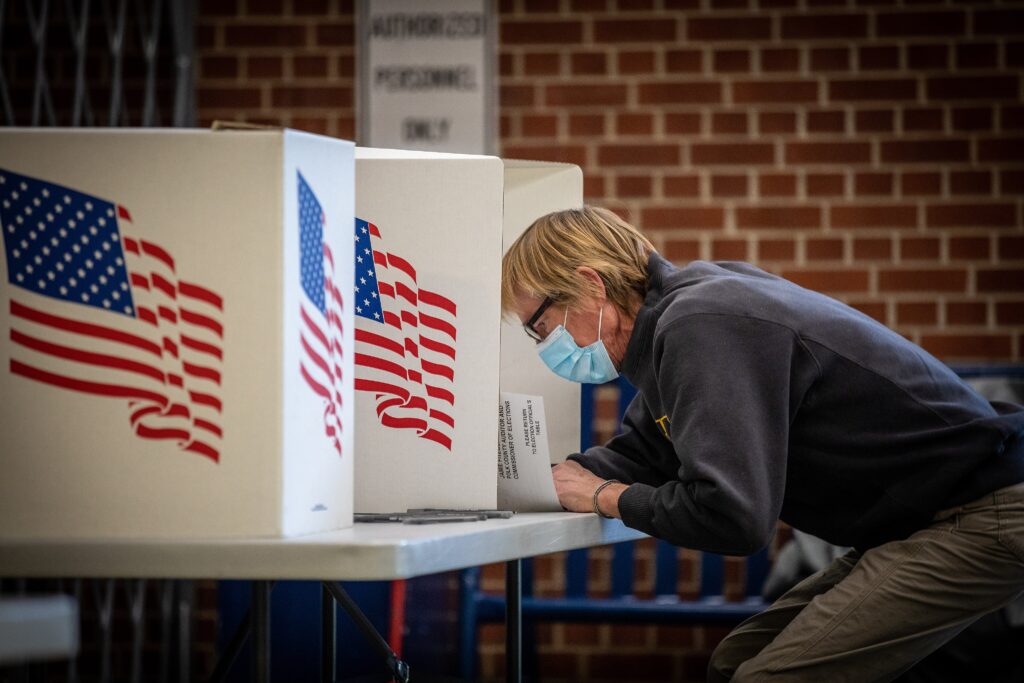
A federal judge has dismissed a Department of Justice lawsuit seeking access to Massachusetts voter rolls, ruling that the administration failed to meet basic legal requirements under federal civil rights law. The decision is the latest development in the Trump administration’s broader effort to obtain voter registration data from states across the country. The ruling represents a significant legal setback for the DOJ’s push to access sensitive personal information held in state election databases.
A U.S. District Court judge in Boston ruled Thursday that the Department of Justice did not comply with the procedural requirements of the Civil Rights Act of 1960 when it sought Massachusetts voter registration records, rendering its legal demand invalid from the outset.
Judge Leo Sorokin, appointed to the federal bench by President Barack Obama, found that the attorney general’s request failed to include a required statement explaining the purpose of the data request and how the information would be used. Under Title III of the Civil Rights Act of 1960, those disclosures are a precondition for any federal demand for state voter records.
The voter rolls in question contain sensitive personal information, including names, birth dates, and partial Social Security numbers.
Sorokin concluded that the DOJ’s demand was legally deficient on its face, finding that the administration had not provided a recognizable basis for the request or identified any plausible purpose for obtaining the data. The ruling sided with Massachusetts Secretary of State William Galvin, a Democrat, who had declined to turn over the records and was subsequently sued by the department.
The DOJ had argued in its filings that it held broad authority to access state voter data and that courts were obligated to direct election officials to produce records when states refused. The department also contended that the Civil Rights Act was designed as a tool for identifying potential violations of election law. Sorokin rejected those arguments, writing that they missed the central legal issue before the court.
The Civil Rights Act of 1960 was passed during the Eisenhower administration to strengthen federal enforcement of voting rights protections, particularly in states where discriminatory practices were widespread. Its provisions governing access to election records were designed to provide oversight while establishing procedural guardrails.
Galvin welcomed the outcome, stating that the court had correctly recognized the administration’s demand as lacking any stated basis. He was joined in a public statement by Massachusetts Attorney General Andrea Joy Campbell, also a Democrat, who described the ruling as a victory for state voters and the legal system. Both officials framed the DOJ’s conduct as an unwarranted intrusion into the privacy of registered voters.
The Trump administration has sought voter registration data from nearly every state as part of what it has described as an effort to ensure the integrity of election rolls. Several states have resisted those requests, and legal challenges have emerged in multiple jurisdictions.


.jpg)